Main Text
Abridged.
Précis
In a lecture in 1896, historian Mandell Creighton reminded his audience that English mediaeval law was not codified in order to enshrine some ideology, or achieve legal purity. It was created to prevent ideologically driven Continental lawmakers encroaching on cherished English customs. Consequently, it is still so bound up with those customs that it does not lend itself to export.
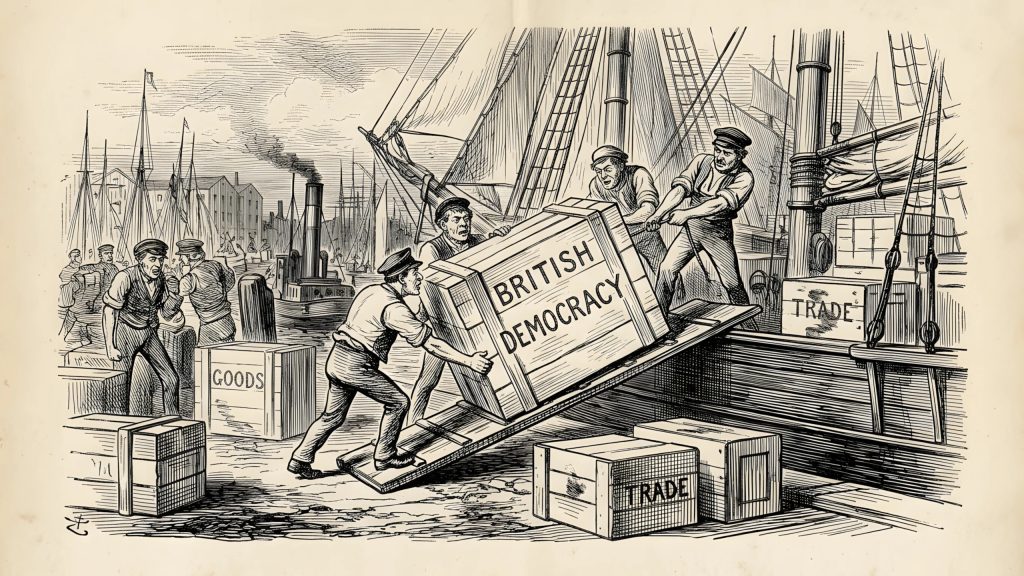
Encouraged by us, other nations have copied the institutions of English parliamentary democracy; but multi-party politics and democratic protest have proved difficult to handle where the customs and conventions of English society are not already firmly established. Some foreign peoples, warned Creighton, are beginning to feel that the political institutions they have borrowed from us have let them down.
It is difficult to refer the growth of English institutions to any very definite principles. Their development did not come from the expansive power of general ideas, but was largely the result of cautious adjustment to the facts of national life. There was always a dread of the rigidity of any system, however excellent; and there was always a resolute maintenance of national, and even of local, customs, against attempts to read them into the terms of a consistent and orderly arrangement. English customs were put into writing, not with a view to their codification, but that they might be maintained against a logical system which was being imported from abroad. [...]
There is, however, another consequence of the antiquity of our institutions, for which we undeservedly suffer in foreign estimation. We are responsible for having invented a form of government which suits ourselves, and seems simple in its main lines, but which really depends on so much beneath those main lines that it is unfitted for exportation.
The methods of our parliamentary government have been freely copied; but, unfortunately, they owe their value in England, not so much to the excellence of the finished article, as to the long process of forging which it has undergone. English institutions, we know, depend for their success on the capacity of the English people to work them; and this depends on the solidarity of our national life, which underlies all mechanism, and gives that mechanism its native power.
We can lend other peoples our mechanism; unhappily we cannot lend them our solidarity. Those who have borrowed from us feel a little sore that things do not work with them so well as they expected. Party government is an excellent thing, but the number of parties must be limited, and it is difficult to limit them artificially. It is well that ministers should be sensitive to public opinion, but it is discouraging when they are so sensitive that a ministry does not endure more than six months. I think there is a certain feeling that we have beguiled other countries and have advertised as a panacea a course of treatment which applies only to ourselves.