
Main Text
Précis
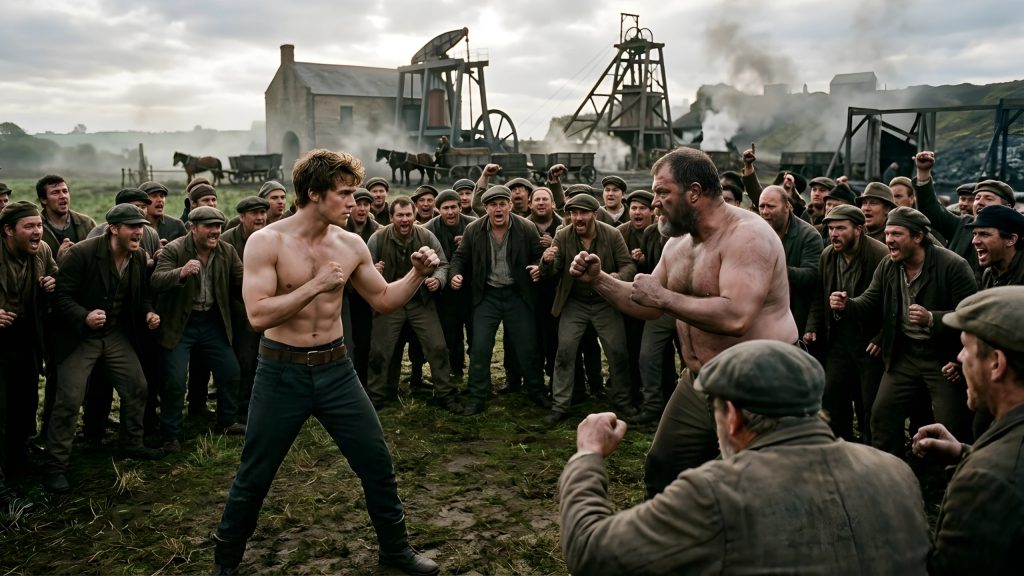
In 1801, George Stephenson (then still just a young man) was appointed brakesman of his colliery in North East England. One day, his handling of the miners’ cage displeased the colliery’s resident bully, Ned Nelson. Tensions rose, until Stephenson felt that for everyone’s peace of mind he had to take Nelson down. A duel, in the form of a fistfight, was arranged.
Nelson took sick leave to prepare, but Stephenson carried on working, greatly encouraged by the expressions of goodwill he received on all sides. The day of the fight came, and despite Nelson’s clear physical advantages, Stephenson put him down. After that, life at the mine became much better; and the two rivals in the ring became fast friends.
Not long after he began to work at Black Callerton as brakesman, he had a quarrel with a pitman named Ned Nelson, a roistering bully, who was the terror of the village. Nelson was a great fighter; and it was therefore considered dangerous to quarrel with him. Stephenson was so unfortunate as not to be able to please this pitman by the way in which he drew him out of the pit; and Nelson swore at him grossly because of the alleged clumsiness of his brakeing. George defended himself, and appealed to the testimony of the other workmen. But Nelson had not been accustomed to George’s style of self-assertion; and, after a great deal of abuse, he threatened to kick the brakesman, who defied him to do so. Nelson ended by challenging Stephenson to a pitched battle; and the latter accepted the challenge, when a day was fixed on which the fight was to come off.
Great was the excitement at Black Callerton when it was known that George Stephenson had accepted Nelson’s challenge. Everybody said he would be killed. The villagers, the young men, and especially the boys of the place, with whom George was a great favourite, all wished that he might beat Nelson, but they scarcely dared to say so. They came about him while he was at work in the engine-house to inquire if it was really true that he was “goin’ to fight Nelson?”
“Ay; never fear for me; I’ll fight him.” And fight him he did.
For some days previous to the appointed day of battle, Nelson went entirely off work for the purpose of keeping himself fresh and strong, whereas Stephenson went on doing his daily work as usual, and appeared not in the least disconcerted by the prospect of the affair. So, on the evening appointed, after George had done his day’s labour, he went into the Dolly Pit Field, where his already exulting rival was ready to meet him. George stripped, and “went in” like a practised pugilist—though it was his first and last fight. After a few rounds, George’s wiry muscles and practised strength enabled him severely to punish his adversary, and to secure an easy victory.
This circumstance is related in illustration of Stephenson’s personal pluck and courage; and it was thoroughly characteristic of the man. He was no pugilist, and the very reverse of quarrelsome. But he would not be put down by the bully of the colliery, and he fought him. There his pugilism ended; they afterwards shook hands, and continued good friends. In after life, Stephenson’s mettle was often as hardly tried, though in a different way; and he did not fail to exhibit the same resolute courage in contending with the bullies of the railway world, as he showed in his encounter with Ned Nelson, the fighting pitman of Callerton.