Main Text
Abridged.
Précis
William Hazlitt complained that increased public literacy had not brought the promised benefits. Instead of widening knowledge and raising the tone of debate, it had led to a literary culture dominated by name-calling, mud-slinging and clever lies, and those writers who did display some dignity were sure to attract the worst treatment.
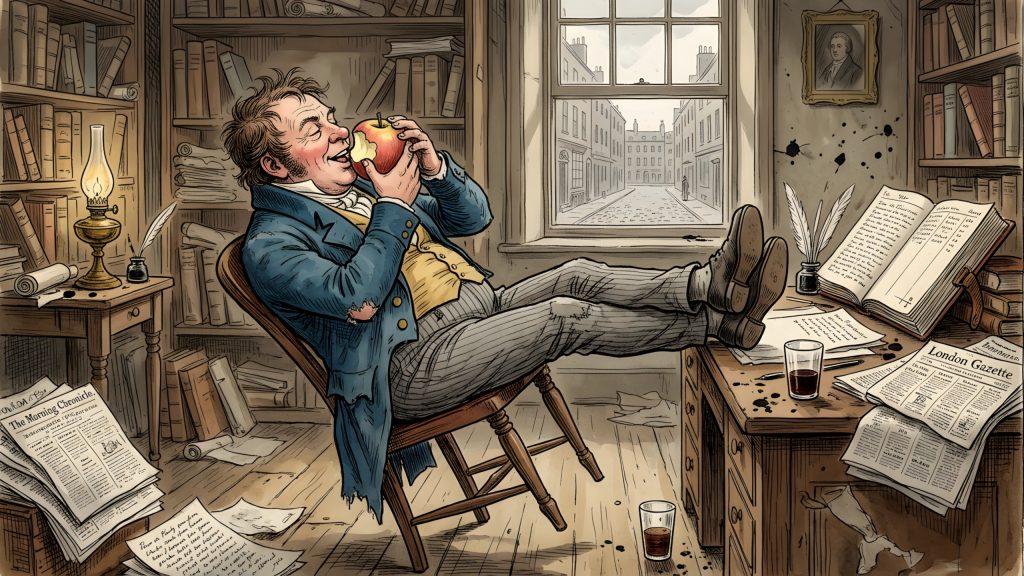
With a nod to ‘Hamlet’, Walton suggested that critics kept authors as a king keeps a counsellor, to be squeezed for anything he can get from him, and then gobbled up. The literate public watched on fascinated as favourites were first made and then destroyed, leaving discarded writers to sell their pen to anyone who would pay.
If, with the diffusion of knowledge, we do not gain an enlargement and elevation of views, where is the benefit? [...] All can now read and write equally; and, it is therefore presumed, equally well. Anything short of this sweeping conclusion is an invidious distinction; and those who claim it for themselves or others are exclusionists in letters. Every one at least can call names — can invent a falsehood, or repeat a story against those who have galled their pragmatical pretensions by really adding to the stock of general amusement or instruction. Every one in a crowd has the power to throw dirt: nine out of ten have the inclination. It is curious that, in an age when the most universally admitted claim to public distinction is literary merit, the attaining this distinction is almost a sure title to public contempt and obloquy. They cry you up, because you are unknown, and do not excite their jealousy; and run you down, when they have thus distinguished you, out of envy and spleen at the very idol they have set up.
A public favourite is ‘kept like an apple in the jaw of an ape, first mouthed to be afterwards swallowed. When they need what you have gleaned, it is but squeezing you, and, sponge, you shall be dry again.’ At first they think only of the pleasure or advantage they receive: but, on reflection, they are mortified at the superiority implied in this involuntary concession, and are determined to be even with you the very first opportunity. What is the prevailing spirit of modern literature? To defame men of letters. What are the publications that succeed? Those that pretend to teach the public that the persons they have been accustomed unwittingly to look up to as the lights of the earth are no better than themselves, or a set of vagabonds, miscreants that should be hunted out of society. Hence men of letters, losing their self-respect, become government tools, and prostitute their talents to the most infamous purposes, or turn dandy scribblers, and set up for gentlemen authors in their own defence.