Main Text
Abridged.
Précis
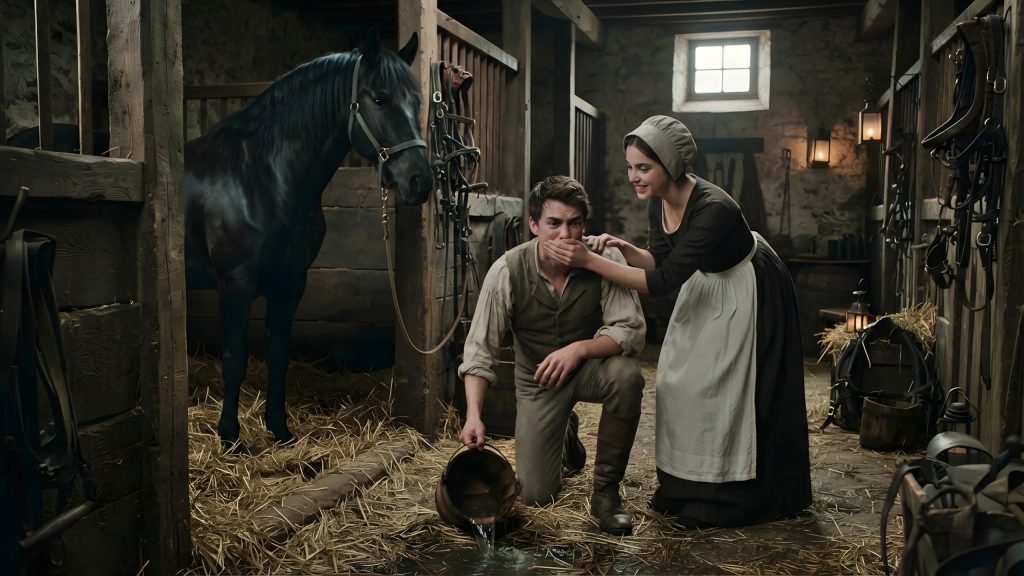
In 1741, a Mrs Devonshire shared a story about a very prim and proper horse. He had belonged to an English gentleman, who was obliged to give him up. Now working in a stables on the Continent, he had gained a reputation for principled intolerance of all intemperate language, refusing to eat or work for days after any infraction — a quirk that had made him everyone’s favourite.
Well may Great Britain be proud of the perfection of symmetry, the speed, and strength of her race of horses. It is impossible for any description to do justice to this matchless animal, and it is only wonderful how man has been able to obtain such a complete mastery over an animal endowed with such power and courage.
When I was abroad I once noticed a little English horse that was put into the carriage, and made some remark to the postilion about him, who told me that he was a very great pet in the stables from his peculiar temper. He had formerly belonged to an Englishman, with whom he had been quite a spoiled favourite. His master, from pecuniary difficulties, was forced to part with him, and he was sold to the Hôtel de Poste, where the postilions were obliged to mend their manners and soften their language after his arrival in the stable.
If a cross or bad word was spoken to him, no power could persuade him to touch a mouthful of food; and if in harness, not a stroke of work would he do, in assisting to draw the carriage: therefore, whenever he came in from his journeys, they were obliged to give him his food, accompanied by all the pretty and coaxing expressions they could make use of.
The postilion told me that when first he came into the stables, one of the men had given him a slight pat on the back, accompanied by an impolite expression, at which the little horse was so affronted that he could not be prevailed upon to touch his food for days...