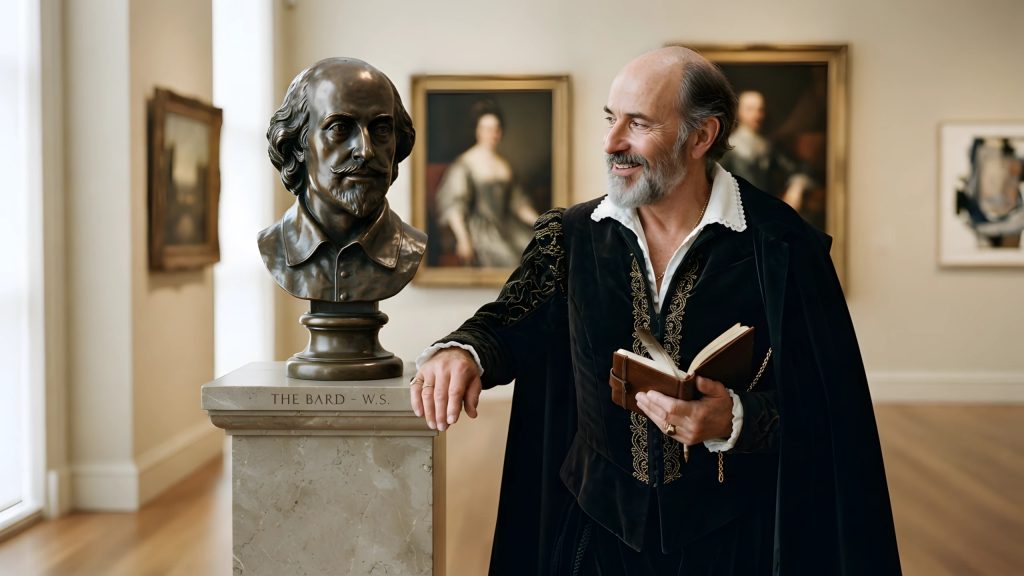
Arthur Clutton-Brock complained that idealising Shakespeare had made the great man almost dull.
ByArthur Clutton-Brock1868-1924
Arthur Clutton-Brock1868-1924
Arthur Clutton-Brock (1868–1924) was an essayist, art and literary critic, and journalist. After serving as literary editor for The Speaker (1904–1906), he became a prominent contributor and art critic for The Times Literary Supplement. He married Evelyn Alice Vernon-Harcourt in 1903 and published notable biographies of Percy Bysshe Shelley (1909) and William Morris (1914), alongside influential First World War moral essays. Regarded as an insightful Edwardian humanist, his clear, accessible prose deftly bridged aesthetics, literature, and spiritual philosophy.
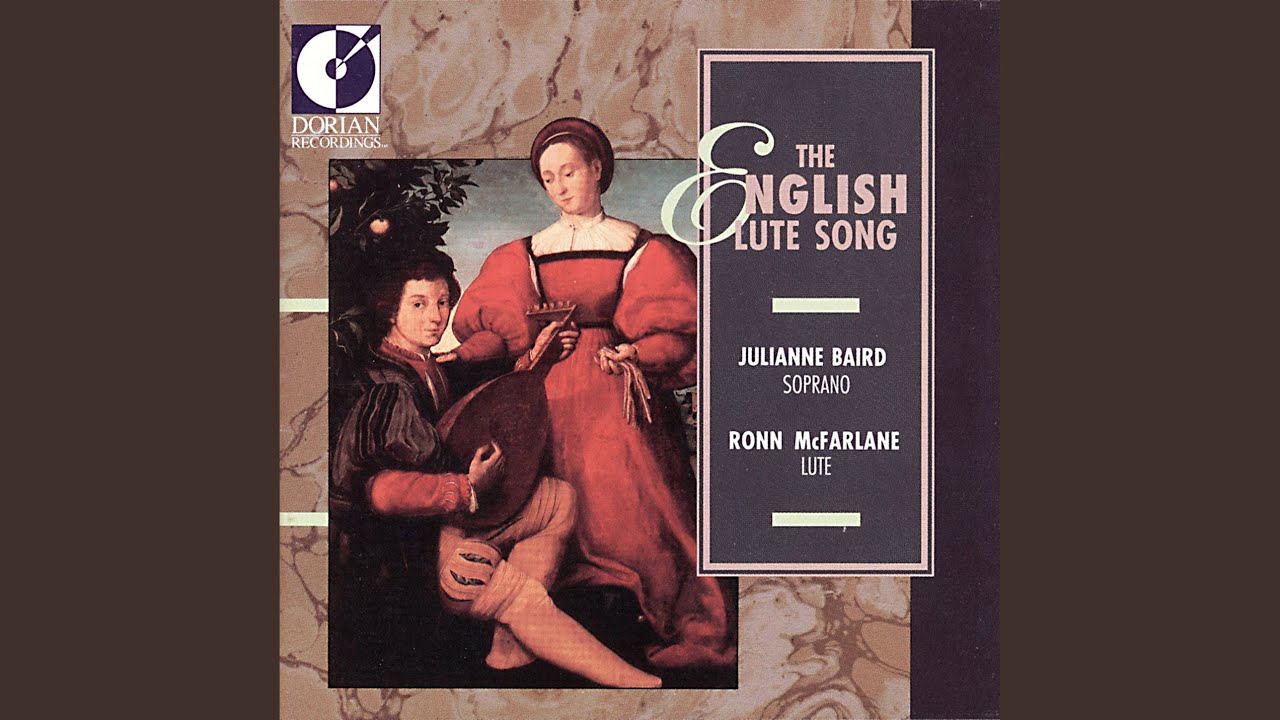
Robert Johnson: Where the bee sucks(Click to expand video player)
In Shakespeare’s play The Tempest, Prospero has just liberated the spirit Ariel from enchantment, and promised him liberty from his own service in due time. This song celebrates Ariel’s upcoming independence, and joyful life in nature. The music is by Robert Johnson (?1583–1633), a royal lutenist to King James I. He is the only composer known to have written music directly for original productions of Shakespeare's plays, and this music may well have been heard by Shakespeare himself.
53s
Where the bee sucks
A light, tripping little setting of Shakespeare’s song from ‘The Tempest’, sung by the airy sprite Ariel.
Where the bee sucks there lurk I:
In a cow-slip’s bed I lie;
There I couch when owls do cry.
On a bat’s back do I fly
After sunset merrily,
Merrily, merrily shall I live now
Under the blossom that hangs on the bough.
From The Tempest by William Shakespeare
Main Text
Arthur Clutton-Brock was a distinguished critic of art and literature, as well as a keen observer of human nature, and knew something of the artistic temperament. In 1919, on the tercentenary of the death of William Shakespeare (1564-1616), he deplored the way that Shakespeare’s admirers, quoters and academic commentators had turned the man and the artist into a National Institution.
Précis
In 1919, the distinguished critic Arthur Clutton-Brock shared his frustration at the way the William Shakespeare had been turned into a flawless National Institution. In doing so, he said, we had robbed the great man of his humanity, and even of a claim to be a true artist; for one of the things that defines an artist is the humility to recognise when he has not given of his best.
Artists haveArtists have their peculiar vanities, and one of them is a desire to be liked for what they have done best. The real Shakespeare must have known quite well that, like other human beings, he did not always do his best; but this institutional Shakespeare always did his best, and therefore he is not a human being and so not an artist. He is praised indiscriminately for passages of which the real Shakespeare must have been a little ashamed, if he ever remembered them, and of which he would certainly not care to be reminded; and the effect of this praise is to make him seem almost a dull writer. But the real Shakespeare, unlike some of the greatest poets, was at great pains not to be dull; he was an entertainer who succeeded because he was himself much entertained with life; he could be amused even by bores, and so he could make them amusing. But the bores have had their posthumous revenge upon him; they have almost persuaded us that he is too great and good to be amusing, and they have made a practice of quoting in speeches and books those passages from him which are least amusing, which, divorced from their context, seem almost dull.
Think and Speak
From a ’Fifties Classroom
01
Jigsaw Sentences
based on the passage above
Ideas can be expressed in more than one form of words. Try to combine each group of ideas below into a single sentence, in at least two quite different ways. Change whatever you like — words, grammar, formal or casual tone — so long as the ideas remain. See if you can include one or more of the words shown with each group. There’s no ‘right answer’ to this: any answer is right provided that all the ideas survive intact and the English is clear and easy on the reader.
I went to see ‘Hamlet’. I expected it would be dull. It wasn’t at all.
Words to include: [Hooked. Surprise. Wrong.]
Shakespeare’s line isn’t his best. It’s better than your alternative. Words to include: [Replace. Worse. Write.]
02
Text and Context
based on the passage above
In List A below, you’ll find eight lively sentences taken from the plays of William Shakespeare. List B has the eight memorable moments they belong to, but they’ve been jumbled up. See if you can match each sentence back to its speaker and its moment. This doesn’t require any prior knowledge, just a quick ear and some powers of deduction.
List A
Ask for me tomorrow, and you shall find me a grave man.
When I said I would die a bachelor, I did not think I should live till I were married.
Dost thou think, because thou art virtuous, there shall be no more cakes and ale?
The first thing we do, let’s kill all the lawyers.
I am as vigilant as a cat to steal cream.
Look, he's winding up the watch of his wit; by and by it will strike.
I say, we will have no more marriages.
I do desire we may be better strangers.
List B
In As You Like It, Orlando doesn’t appreciate Jaques teasing him about Rosalind, and hints he’d prefer to be alone.
In The Tempest, Sebastian braces for Gonzalo’s clever talk.
In Much Ado About Nothing, love makes Benedick backtrack on a rash vow.
In Henry IV Part 1, Falstaff is not going to let the King catch him napping.
In Romeo and Juliet, Mercutio has just received a mortal blow but still manages to crack a joke.
Hamlet has a sudden attack of misogyny, which leaves Ophelia fearing for his sanity.
In Henry VI Part 2, Dick the Butcher has a suggestion for Jack Cade’s planned rebellion.
In Twelfth Night, Sir Toby Belch thinks Malvolio is a killjoy.
Answers
Ask for me tomorrow, and you shall find me a grave man. [Mercutio]
When I said I would die a bachelor, I did not think I should live till I were married. [Benedick]
Dost thou think, because thou art virtuous, there shall be no more cakes and ale? [Sir Toby Belch]
The first thing we do, let’s kill all the lawyers. [Dick the Butcher]
I am as vigilant as a cat to steal cream. [Falstaff]
Look, he’s winding up the watch of his wit; by and by it will strike. [Sebastian]
I say, we will have no more marriages. [Hamlet]
I do desire we may be better strangers. [Orlando]
Clay Lane is based on textbooks written over
seventy years ago, to help us speak with conviction
and courage and not just reproduce the opinions of
others. My word games are intended for
adults who are free from examinations, and can settle
down to the task of developing their talents or of
making good the gaps in their command of English.
There is no examiner here. Take time to observe, to
think, and to use your imagination.
Have something to
say: say it carefully and feelingly. Go ahead.
For the Writer In You
Use Familiar Words First
A common mistake is to use the least familiar [word] in the hope that it improves the expression, but the stilted impression thus created makes the reader laugh. ‘It is commencing to rain’ — a mistake like that gives you away. ‘Commence’ is not a better word than ‘start’, but is the word reserved for dignified and formal occasions. Use the plain, simple, ordinary word unless you have a really good reason for preferring a less familiar alternative.