Main Text
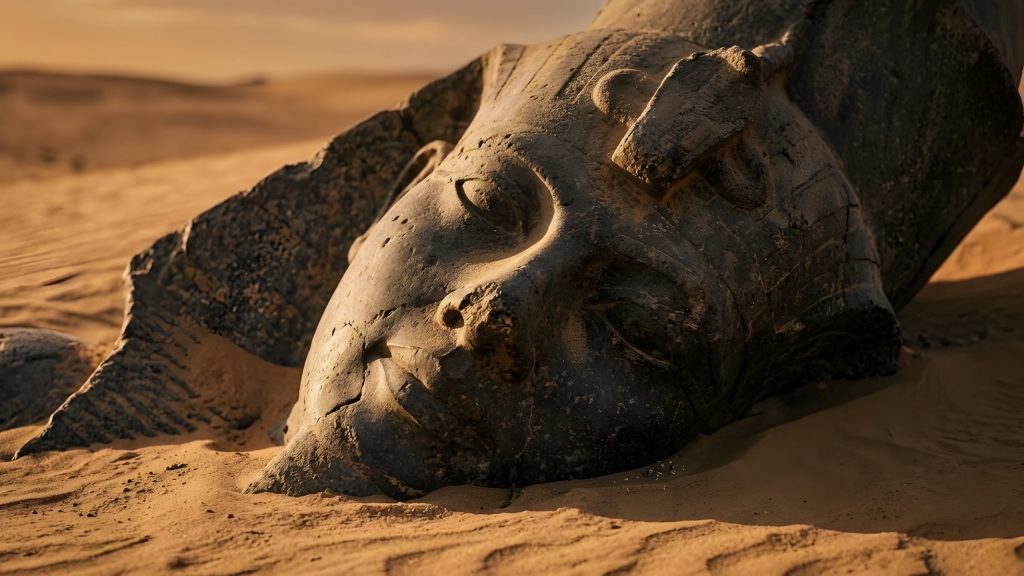
The statue of Pharaoh Rameses II (r. 1279–1213 BC) at Thebes was called the tomb of Ozymandias by ancient historian Diodorus Siculus. In 1816, the bust of Rameses was removed and arrived for display in London in March 1818. In keen anticipation, Percy Shelley and Horace Smith held a friendly writing contest, to see who could write the best short verse on the historic sculpture. This is Shelley’s contribution, published in The Examiner No. 524 (January 11, 1818) under the byline Glirastes.
Ozymandias
I met a traveller from an antique land
Who said: “Two vast and trunkless legs of stone
Stand in the desert. Near them, on the sand,
Half sunk, a shattered visage lies, whose frown,
And wrinkled lip, and sneer of cold command,
Tell that its sculptor well those passions read
Which yet survive, stamped on these lifeless things,
The hand that mocked them and the heart that fed:
And on the pedestal these words appear:
‘My name is Ozymandias, king of kings:
Look on my works, ye Mighty, and despair!’
Nothing beside remains. Round the decay
Of that colossal wreck, boundless and bare
The lone and level sands stretch far away.”