
Main Text
Précis
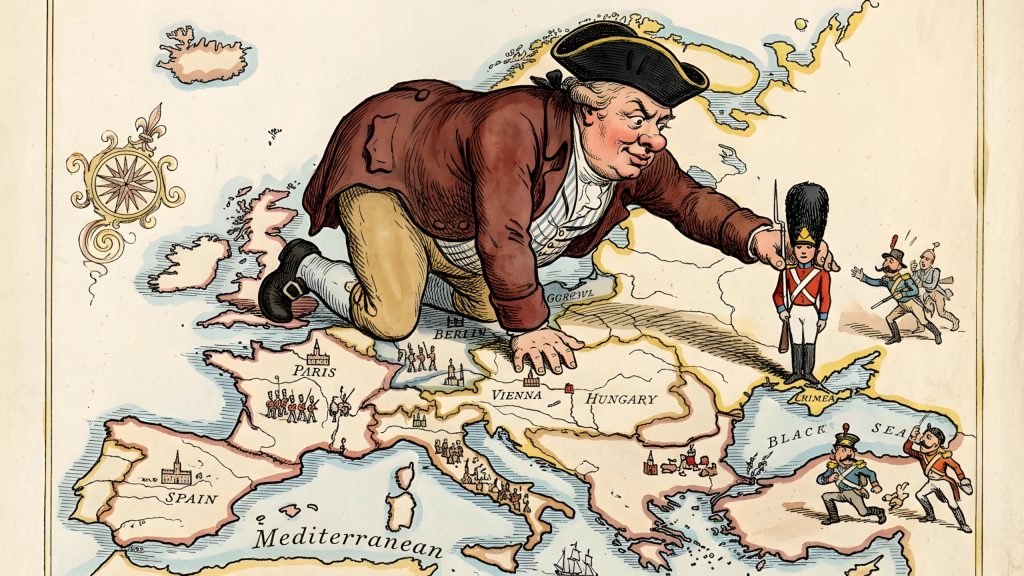
In 1853, as events moved quickly towards the Crimean War, Richard Cobden told a peace conference in Edinburgh that in his opinion no foreign power seriously contemplated an invasion of Britain. By contrast Britain had repeatedly stepped into in disputes overseas, justifying them on humanitarian or economic grounds, but rarely achieved any of our stated goals.
Cobden went on to say that far from ending religious discrimination or boosting free trade, Britain’s military interventions had done little more than amass a huge national debt and alienate international partners. Yet no lessons had been learnt. With no credible threat to excuse it, the national debt kept growing and politicians kept crying ‘intervention!’ and ‘invasion!’ in succeeding breaths.
I don’t believe that anybody is coming to attack us at all. I have never heard or read in modern history of anybody that meditated an attack upon our shores; I will hardly except even that of Napoleon the Great, because he came and took a look at us, and then he turned away to a more inviting foe. But what my reading and experience have taught me is this, that the danger which the English people have to apprehend arises from that peculiarity in their temperament, that idiosyncrasy of their nature, — for nations have idiosyncrasies as well as individuals, — which leads us constantly to go and seek grounds of quarrel and objects of hostility, even to the remotest parts of the globe.
I have seen that in past times Englishmen have been successively fighting the battles of almost every people on the globe; but I have seen also that — whether the objects of our intervention in these remote quarrels have been to advance the principles of civil and religious liberty, as I have sometimes heard it said, or to promote the progress of a freer commercial intercourse — I have seen that our objects have steadily eluded our grasp.
And the only result, almost the only practical result, which I have seen to this characteristic of our country, is this, that we have loaded ourselves with an amount of debt greater than that of all the nations of the world besides, and that we are mistrusted, and not liked, by almost every nation in Christendom. Nor do I see that the spirit of late times has been very much changed for the better; for, if we cannot be persuaded to go and attack somebody else, then it seems to be equally easy to persuade us that somebody is coming to attack us.
Now, I beg it most emphatically to be understood that, when I attend these peace meetings, it is not that I wish to bow down our necks and invite invaders to come amongst us; nobody intends to invade you, nobody wants to invade you; the quarrels which you have had, the wars which you have been engaged in, and the debts which you have contracted, have been all of your own seeking.