Main Text
Précis
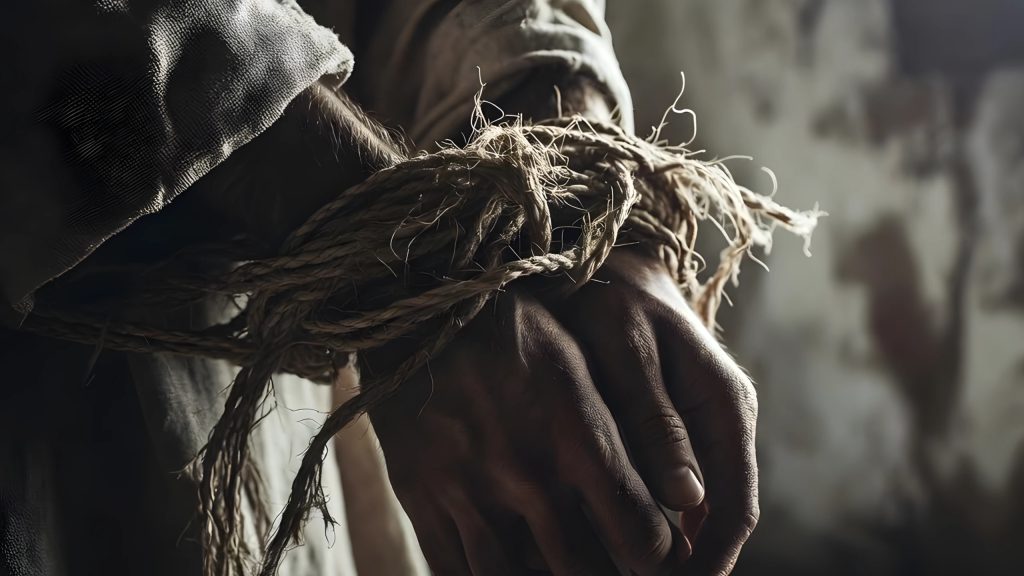
After he was wounded in battle in 679, defending Mercia against Northumbrian attack, royal thegn Imma was captured by the enemy. By concealing his true identity, Imma ensured he suffered no worse than being bound; but when the bonds would not hold, loosening themselves regularly and especially around nine in the morning, rumours flew that he had magical powers.
On learning that Imma was really a high-value enemy, the Northumbrian king sold him as a slave to London. His new master still could not keep Imma bound, so he allowed Imma’s friends to buy his freedom. Then Imma discovered that his bonds had fallen off whenever his brother Tunna, who thought he was dead, prayed for him during mass.
IN 679, King Ecgfrith of Northumbria clashed in battle with King Ethelred of Mercia. Ecgfrith’s eighteen-year-old brother Ælfwine, who was also Ethelred’s brother-in-law, died in the fighting, and had not the Archbishop of Canterbury, Theodore, acted as peacemaker the two kingdoms might have been swallowed up in a blood feud.
During the battle, one of Ethelred’s thegns, named Imma, was knocked down and left for dead. He lay senseless among the slain all that day and through the night, but the following morning he managed to stagger into the Northumbrian camp. He had wits enough to say that he was a poor peasant, a family man, who came not to fight but only to carry supplies. Ecgfrith ordered his physicians to care for him, but thought it prudent to keep him tied up.
This, however, proved surprisingly difficult. The guards would check his knots, and the moment they turned away the cords would unravel themselves. It could happen any time, but was especially bad around nine o’clock in the morning. The nobleman responsible for his safekeeping was so puzzled by this that he cautiously inquired as to what spells or runes Imma used — for he had read of such things.
“I know nothing of such arts” protested Imma. “But my brother Tunna is a priest, and no doubt he thinks I am dead, and prays for my soul during mass. And were I now in that better place above,” he added thoughtfully, “the bonds upon my soul would be dissolved by his prayers just like this.”
It was becoming clear that Imma was no peasant, and Ecgfrith promised to spare his life in return for the truth. When he heard he had been nursing a Mercian viper, he looked like thunder but kept his word, and sold Imma to a Frisian in London, then within the Kingdom of Kent. This Frisian, however, found that neither rope nor chain would hold this uncanny slave, especially in the mornings around nine; so when Hlothere, King of Kent, whose aunt Queen Ethelthryth had once employed Imma in her retinue, offered to buy Imma’s freedom, the deal was quickly done.
Later, Tunna explained to Imma that he had mistaken a mangled corpse on the battlefield for him, and said many prayers for the poor wretch’s soul during mass. “When was this?” asked Imma, suddenly. “Every morning,” replied Tunna. “Around nine.”