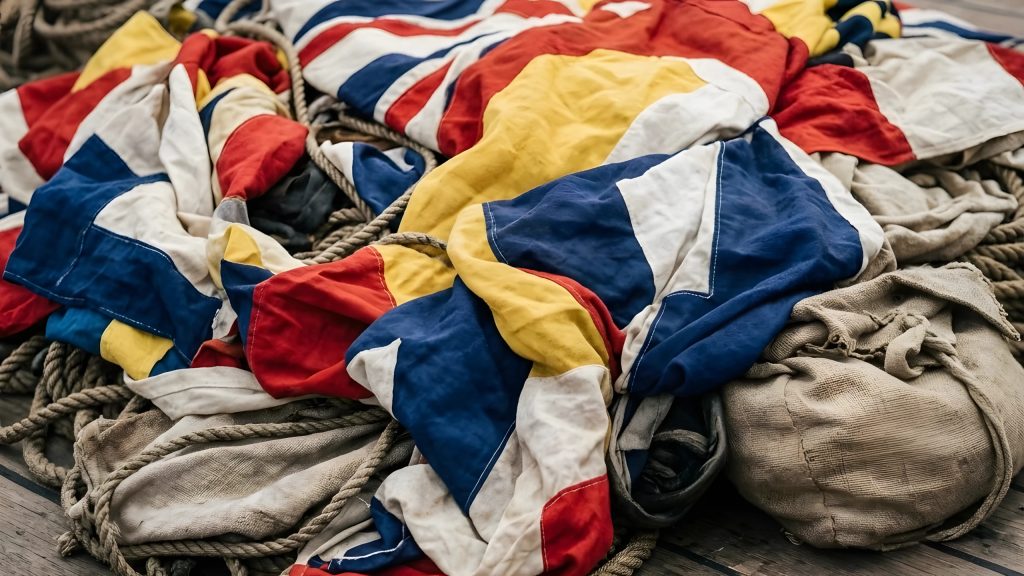
Lieutenant John Pasco not only flew the most famous signal in British history, he improved it.
ByJohn Pasco1774-1853
John Pasco1774-1853
John Pasco was a Royal Navy lieutenant and Lord Nelson’s signal officer aboard HMS Victory during the Battle of Trafalgar in 1805; it was Paso who hoisted the historic signal “England expects that every man will do his duty” shortly before battle was engaged. He subsequently rose to the rank of Rear-Admiral, and left behind detailed personal accounts and logs documenting his naval career.
Muzio Clementi: Andante un poco mosso(Click to expand video player)
8m 27s
Andante un poco mosso
Symphony No. 3 in G ‘The Great National’
The second movement of Clementi’s Great National Symphony, founded on a well-known tune.
On October 21st, 1805, the Royal Navy crushed a French and Spanish fleet at Cape Trafalgar, Spain. This permanently deprived Napoleon Bonaparte, the French Emperor, of sea-power, and ended his hopes of conquering Britain. Though Admiral Nelson died that day, his call to arms remains one of the best-known sentences in the English language. Here, Lieutenant John Pasco recalls how it was made.
His Lordship came to me on the poop, and after ordering certain signals to be made, about a quarter to noon, he said, Mr Pasco, I wish to say to the Fleet, England confides that every man will do his duty; and he added, you must be quick, for I have one more to make, which is for Close Action. I replied, If your Lordship will permit me to substitute the word expects for confides the signal will soon be completed, because the word expects is in the vocabulary, and confides must be spelt. His Lordship replied, in haste, and with seeming satisfaction, That will do, Pasco, make it directly. When it had been answered by a few Ships in the Van, he ordered me to make the signal for Close Action, and to keep it up: accordingly, I hoisted No. 16 at the top-gallant mast-head, and there it remained until shot away.
Think and Speak
From a ’Fifties Classroom
For each group of words in this list, use sentences to show the similarities in their meaning or use, and also their differences:
confide, expect
flag, signal
hoist, lift
spelt, spelled
For the Writer In You
Don’t Use Words Off-the-Peg
So many remarks have been devastating, so many blows staggering, so many advances spectacular, so many figures fantastic, so often has variety been bewildering, that these descriptive words have lost their sting. Don’t make it look as though you get your language from a chain-store.